Jacobean Fabric & Wallpaper: A Timeless Floral Pattern for Traditional and Modern Interiors
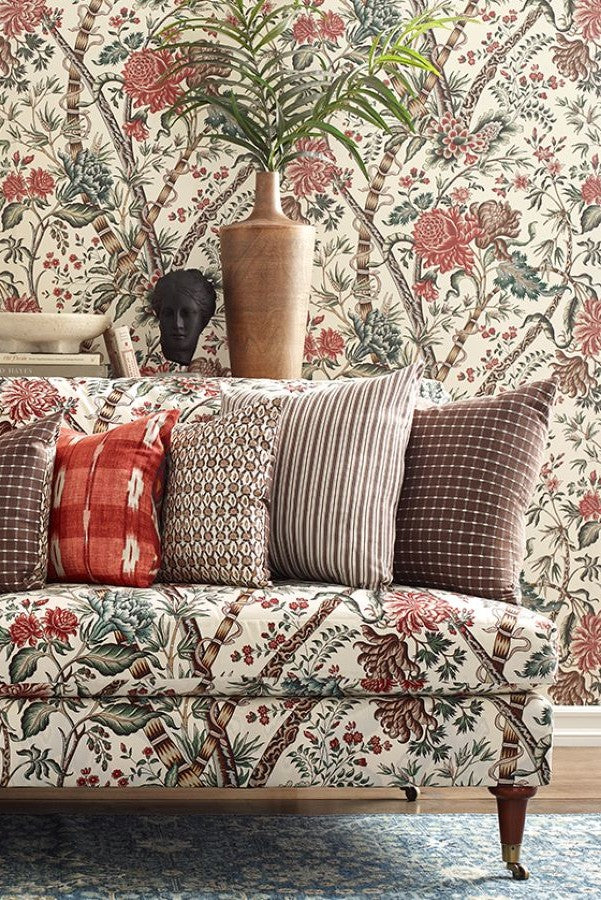
Few patterns have the staying power of Jacobean floral design. Recognizable by its sweeping vines, oversized flowers, stylized leaves, and richly detailed botanical forms, Jacobean patterns have moved effortlessly through centuries of decorating.
Today, Jacobean fabric and Jacobean wallpaper feel just as relevant in a layered traditional home as they do in a more contemporary interior. The scale, movement, and botanical detail give these patterns a distinctive presence that separates them from softer, more conventional floral designs.
At The WorkRoom, you can discover Jacobean-inspired designs throughout our Botanical & Floral Fabric collection and Floral Wallpaper collection, with patterns ranging from muted heritage palettes to saturated blues, greens, reds, and multicolor combinations.

What Is a Jacobean Pattern?
A Jacobean pattern is a decorative style most closely associated with the elaborate floral motifs found in textiles and embroidery inspired by early 17th-century England.
Rather than attempting to depict flowers with botanical realism, Jacobean designs typically reinterpret nature in a more imaginative and ornamental way. Flowers may be exaggerated in scale, leaves can curl dramatically around stems, and different botanical elements are often connected through elaborate trailing vines.
Common characteristics include large stylized flowers, scrolling vines, branching stems, decorative leaves, berries, fruit, and occasional birds or other natural motifs.
That combination creates the movement and richness that makes Jacobean design immediately recognizable.
If you love this style of nature-inspired pattern, our broader Botanical & Floral Fabric collection is an ideal place to explore similar designer textiles for upholstery, drapery, pillows, and other interior applications.
Jacobean Floral vs. Traditional Floral
Not every floral pattern is Jacobean.
Traditional floral fabric might feature scattered roses, delicate wildflowers, botanical illustrations, or small repeating blossoms. Jacobean floral fabric tends to be larger, more stylized, more structured, and more dramatic.
The flowers are often oversized and ornamental, while stems, vines, and foliage become an equally important part of the overall composition.
This makes Jacobean patterns particularly effective when you want a floral that feels decorative and substantial rather than delicate.
For even more floral options, browse our complete Botanical & Floral Fabric collection or explore Floral Wallpaper for walls.
Why Jacobean Fabric Is Still Popular
One reason Jacobean fabric continues to work so beautifully is its versatility.
A richly colored Jacobean print can create the layered character associated with English country interiors, while the same type of motif rendered in blue and white can feel cleaner and more transitional.
Neutral Jacobean patterns can even work in contemporary rooms where the movement of the design matters more than strong color.
The complexity of a Jacobean floral also gives decorators an easy starting point for an entire room. A single multicolor fabric can establish the palette for paint, upholstery, trim, rugs, and accessories.
Explore our complete luxury fabric collection to coordinate Jacobean florals with solids, textures, stripes, velvets, and complementary patterns.
Decorating With Jacobean Fabric
Jacobean fabric is especially well suited to applications where the full repeat can be appreciated.
On drapery and curtains, long panels allow climbing stems and oversized blossoms to unfold vertically. The result can feel luxurious and dramatic without requiring an overly formal room.
For upholstery, Jacobean patterns can transform an accent chair, bench, ottoman, or headboard into a focal point. Larger furniture pieces can also handle Jacobean prints beautifully when the room has enough visual breathing room around them.
Jacobean fabric is also an excellent choice for pillows and decorative cushions, particularly when layered with quieter textiles.
One of the easiest combinations is a large Jacobean floral paired with a crisp stripe fabric. The geometric structure of a stripe helps balance the organic movement of the floral.
Rather than trying to match every color within a multicolor Jacobean pattern, choose one or two secondary colors and repeat those throughout the room.

Jacobean Wallpaper Makes a Statement
The generous scale and flowing composition of a Jacobean motif translate naturally to walls.
Jacobean wallpaper can make a dining room feel established and collected, bring warmth to a bedroom, or transform a powder room into a dramatic jewel-box space.
In larger rooms, continuous vines and botanical elements create movement across the walls without the rigid repetition associated with some geometric designs.
Browse our Floral Wallpaper collection to find designer wallcoverings featuring flowers, vines, leaves, and other botanical motifs.
You can also explore The WorkRoom's complete wallpaper collection for more than floral patterns, including textured, scenic, geometric, natural, and decorative wallcoverings.

Jacobean Patterns and the English Country Look
Jacobean florals feel particularly natural in English country, cottage, traditional, grandmillennial, and layered maximalist interiors.
Try combining them with stripes, checks, antique furniture, painted woodwork, woven rugs, velvet, linen, and smaller-scale decorative patterns.
The key is not to make everything match.
Layering patterns of different scales generally creates a more sophisticated result. A large Jacobean floral might be paired with a narrow stripe fabric, a small check, and a solid velvet.
That contrast allows each pattern to retain its individual character while still creating a cohesive room.
Can Jacobean Fabric Look Modern?
Absolutely.
Choose a Jacobean pattern with an unexpected color palette or simplified background and the effect changes considerably.
A dramatic blue-and-white Jacobean fabric can feel crisp and tailored. Charcoal, ivory, taupe, or neutral versions emphasize the linework rather than the historical reference. Brighter colorways can move the pattern toward a more eclectic or maximalist look.
You can also modernize Jacobean fabric through the way it is used.
Instead of covering an entire room, consider a single statement chair, Roman shade, upholstered headboard, or pair of oversized pillows against otherwise restrained furnishings.
The contrast between an ornate historical pattern and clean contemporary furniture can be especially striking.

Jacobean, Chintz, and Botanical Patterns: What's the Difference?
These pattern categories frequently overlap, but they are not interchangeable.
Jacobean describes a stylized decorative vocabulary characterized by elaborate flowers, vines, stems, and foliage.
Chintz traditionally refers to printed cotton textiles, particularly richly colored floral designs. Many historic-looking chintz fabrics have a similar layered decorative character, and The WorkRoom offers a dedicated Chintz Fabric category within our designer collections directory.
Botanical patterns are much broader. They can include everything from highly realistic plant studies and tropical foliage to abstract leaves and stylized florals.
That means a pattern can be both Jacobean and botanical, while certain Jacobean designs can also have a chintz-like appearance.
When shopping, looking at the actual pattern is often more useful than relying exclusively on a single category name.
Jacobean vs. Damask
Jacobean and damask patterns can both appear in traditional interiors, but visually they are very different.
Jacobean patterns are based primarily on floral and botanical forms, with vines and flowers creating organic movement.
Damask relies more heavily on symmetrical ornamental motifs and formal repetition.
If you prefer more structured traditional designs, explore our Damask Wallpaper collection. If you prefer flowing flowers and foliage, Jacobean and botanical patterns will usually be the better fit.
Jacobean vs. Chinoiserie
Jacobean and chinoiserie designs can also share botanical elements, but their visual inspiration differs.
Jacobean designs tend to emphasize stylized flowers, curling leaves, and scrolling vines.
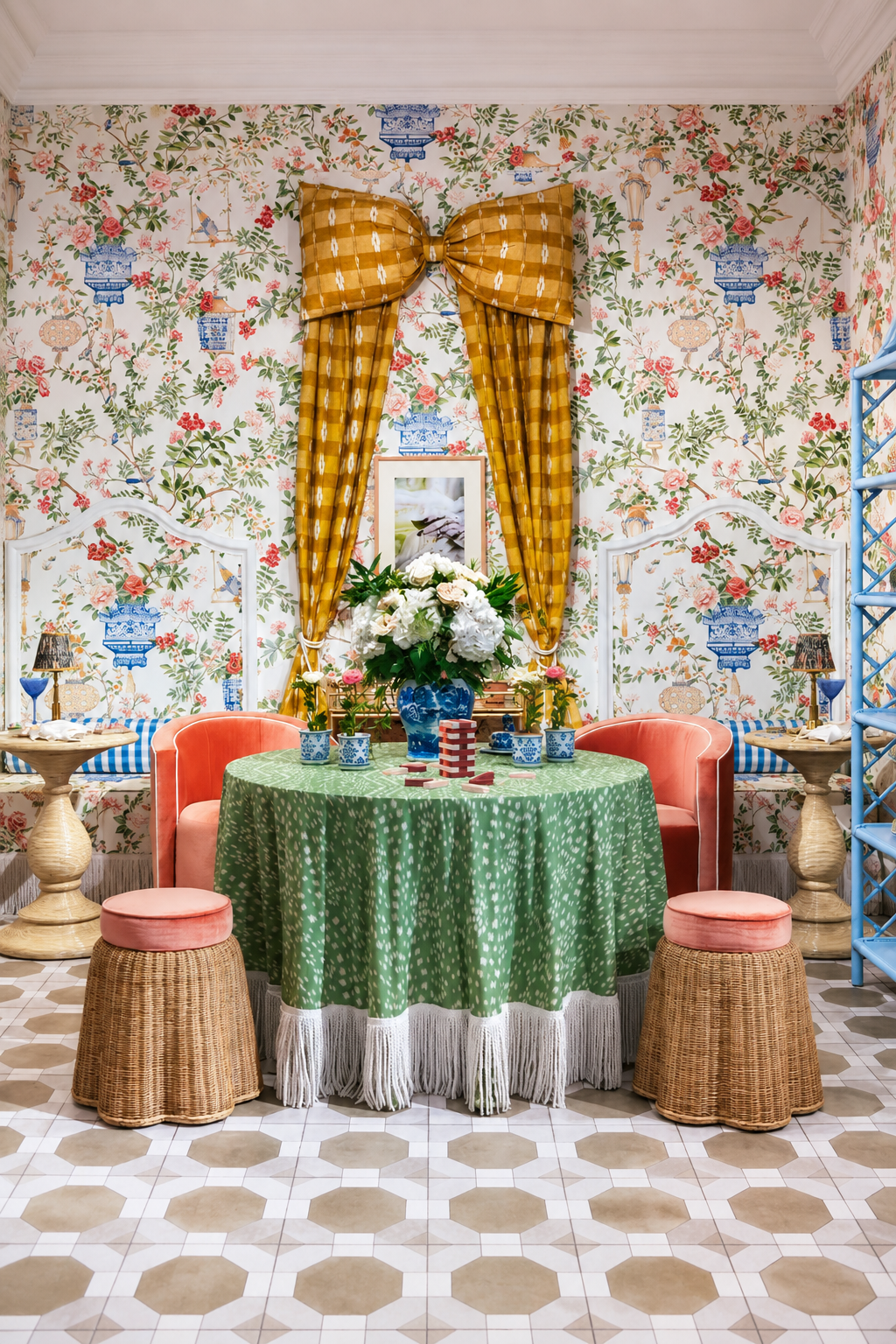
Chinoiserie often introduces flowering branches, birds, pagodas, scenic gardens, exotic botanicals, and other East Asian-inspired decorative motifs.
If you love detailed florals but want something more scenic or narrative, explore our Chinoiserie Wallpaper collection.
Choosing the Right Jacobean Fabric or Wallpaper
Start with scale.
Large Jacobean patterns make a stronger visual statement and generally work beautifully on curtains, walls, headboards, and larger upholstered pieces.
Smaller-scale versions may be easier to use on pillows, occasional chairs, Roman shades, or in compact spaces.
Next, consider the background color.
A light ground can keep an elaborate motif airy, while navy, charcoal, chocolate, deep green, or other darker grounds can create a richer and more enveloping effect.
Finally, look carefully at the individual colors within the pattern.
Jacobean prints often contain multiple hues, making them particularly useful as the starting point for an entire interior palette.
Create a Layered Room With Jacobean Patterns
One of the greatest advantages of Jacobean design is how easily it can anchor other patterns.
Start with the Jacobean floral as the room's dominant print. Then introduce quieter patterns around it.
A stripe provides structure. A solid gives the eye somewhere to rest. A subtle texture introduces depth without competing with the floral.
For a more exuberant traditional interior, you can layer Jacobean florals with other historical design traditions, including damask, chinoiserie, checks, and smaller botanical prints.
Browse all of our designer fabric collections and designer wallpaper collections to build a coordinated room around your favorite pattern.
A Pattern With Centuries of Staying Power
Decorating tastes continually change, but great floral patterns have a remarkable ability to adapt.
Jacobean designs remain relevant because they offer much more than flowers. Their sweeping vines, exaggerated foliage, layered blossoms, and rhythmic compositions give rooms movement and personality.
They can feel historic or contemporary, formal or relaxed, richly traditional or unexpectedly modern depending on their color, scale, and surroundings.
Whether you're creating an English country bedroom, a traditional dining room, a colorful maximalist interior, or simply adding one beautifully patterned accent, Jacobean fabric and wallpaper offer a timeless way to bring pattern, color, and botanical character into a room.
Explore Botanical & Floral Fabric at The WorkRoom and Floral Wallpaper at The WorkRoom to discover designer patterns for upholstery, drapery, walls, and beautifully layered interiors.